
Around Pinellas Park ·
Living in Pinellas Park, Florida
An invitation to the middle of Pinellas County: where the city sits, how a week here actually unfolds, and why building on high inland ground changes what ownership costs to carry.
The short answer
- Pinellas Park is its own city in mid Pinellas County, incorporated in 1914, not a St. Petersburg neighborhood.
- Beaches lie ten to fifteen minutes west, downtown St. Petersburg about twenty minutes south, Tampa about twenty-five northeast.
- Inland elevation and FEMA Zone X shape the monthly cost of ownership more than the purchase price does.
A city in the middle, by design
There is a particular kind of luxury in never having to choose. Pinellas Park sits in the middle of the peninsula, inland from the Gulf and north of St. Petersburg proper, and that middle position is the entire argument. The beaches are ten to fifteen minutes west. Downtown St. Petersburg is about twenty minutes south. Tampa International Airport is roughly twenty-five minutes east across the bay. Nothing you want is far, and nothing you want to be away from is close.
The city has been its own municipality since 1914, with its own council, police department, library and parks system. It is not a district of St. Pete and never has been, which is why buyers who type only the larger city's name into a search bar never see what has been built here. That gap in search habit is why the same specification, the same block, the same impact glass and the same rooftop cost less eight miles north than they do on the water.
Geographically, the city runs along Park Boulevard and 49th Street, with the Gateway employment corridor and the interstate interchange just to the northeast. It is a working city rather than a resort one: established neighborhoods through the middle, trade and industry to the east, and a small amount of considered new construction filling in between them. That is the setting. It rewards people who look closely.
How a week here unfolds
The pleasure of this address reveals itself on the second visit rather than the first. Sprouts Farmers Market is under a mile from the gate, which means the weekly shop is a detour rather than an expedition. The Shoppes at Park Place, with Target, Academy Sports and a Regal cinema, sits three minutes out. There is a twenty-four-hour gym two minutes down the street, which matters at six in the morning and again at ten at night.
Green space is just as near. Freedom Lake Park, with its loop walk, playground and dog park, is five minutes away and becomes a habit rather than an outing. Sawgrass Lake Park, four hundred acres of preserve laced with elevated boardwalks, is roughly the same distance and offers the version of Florida that existed before anyone graded a lot. England Brothers Park anchors the civic centre of the city, its bandshell carrying events through the cooler months.
Weekends tend to run in one of two directions. West, to Treasure Island or Madeira Beach, ten to twelve minutes with the windows down. Or south, to the Grand Central District, the St. Pete Pier and the Dalí Museum, ten to twelve minutes the other way. Very little of what a household does in an ordinary week involves the interstate at all, and that quiet fact is worth more than most amenities.
| Destination | Typical drive |
|---|---|
| Sprouts Farmers Market | Under 1 mile |
| Amped Fitness (24 hours) | 2 minutes |
| Shoppes at Park Place | 3 minutes |
| Freedom Lake Park | 5 minutes |
| Sawgrass Lake Park | 5 minutes |
| Treasure Island | 10 minutes |
| Downtown St. Petersburg | 20 minutes |
Where new construction fits
Most of Pinellas Park was built out in the post-war decades, so the prevailing stock is single-story block on modest lots, joined by a number of long-established communities along the older corridors. Land is essentially fully subscribed. Anything genuinely new arrives as infill on a small parcel, in small numbers, and is therefore built by someone who had to care about the parcel.
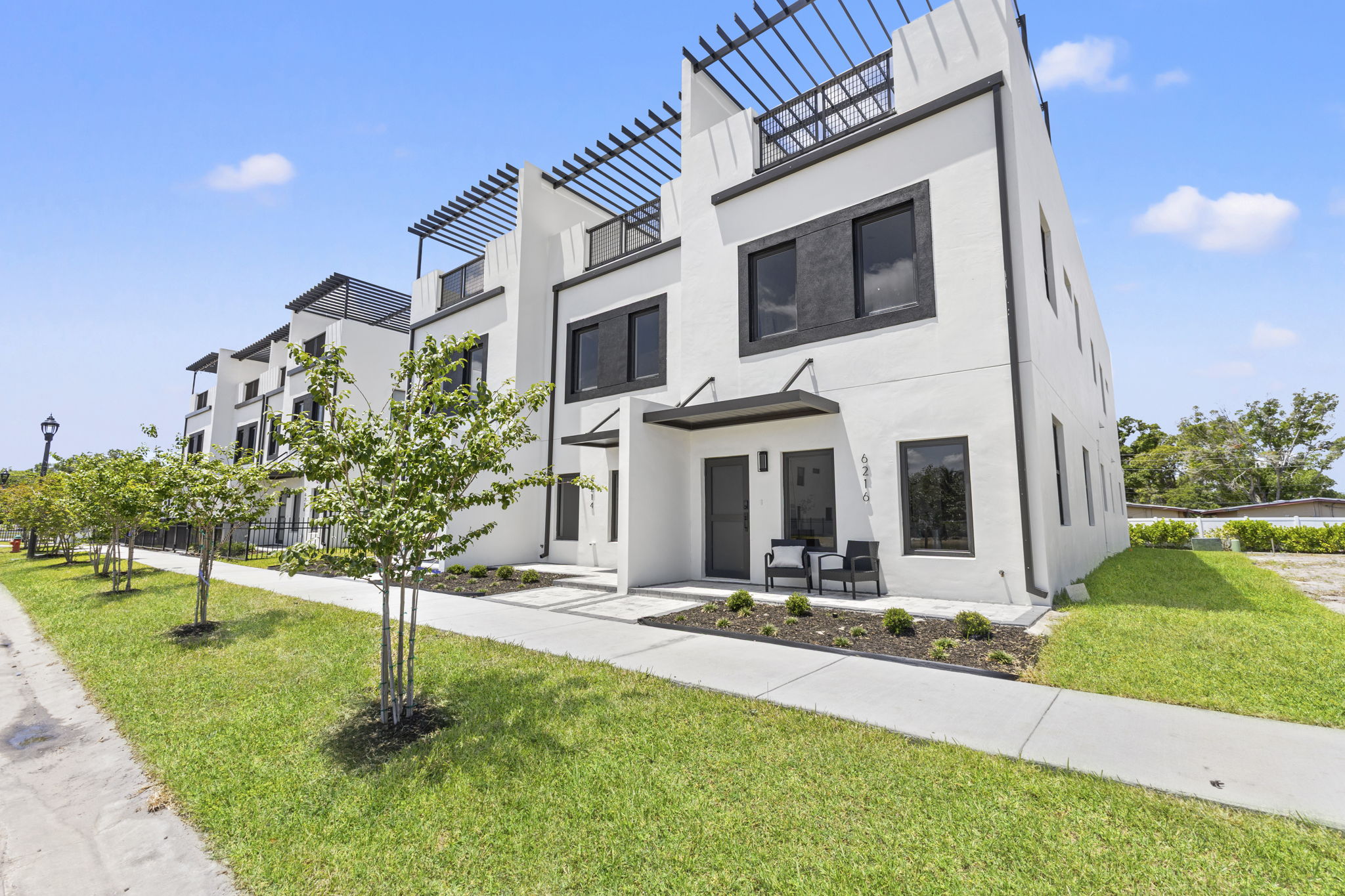
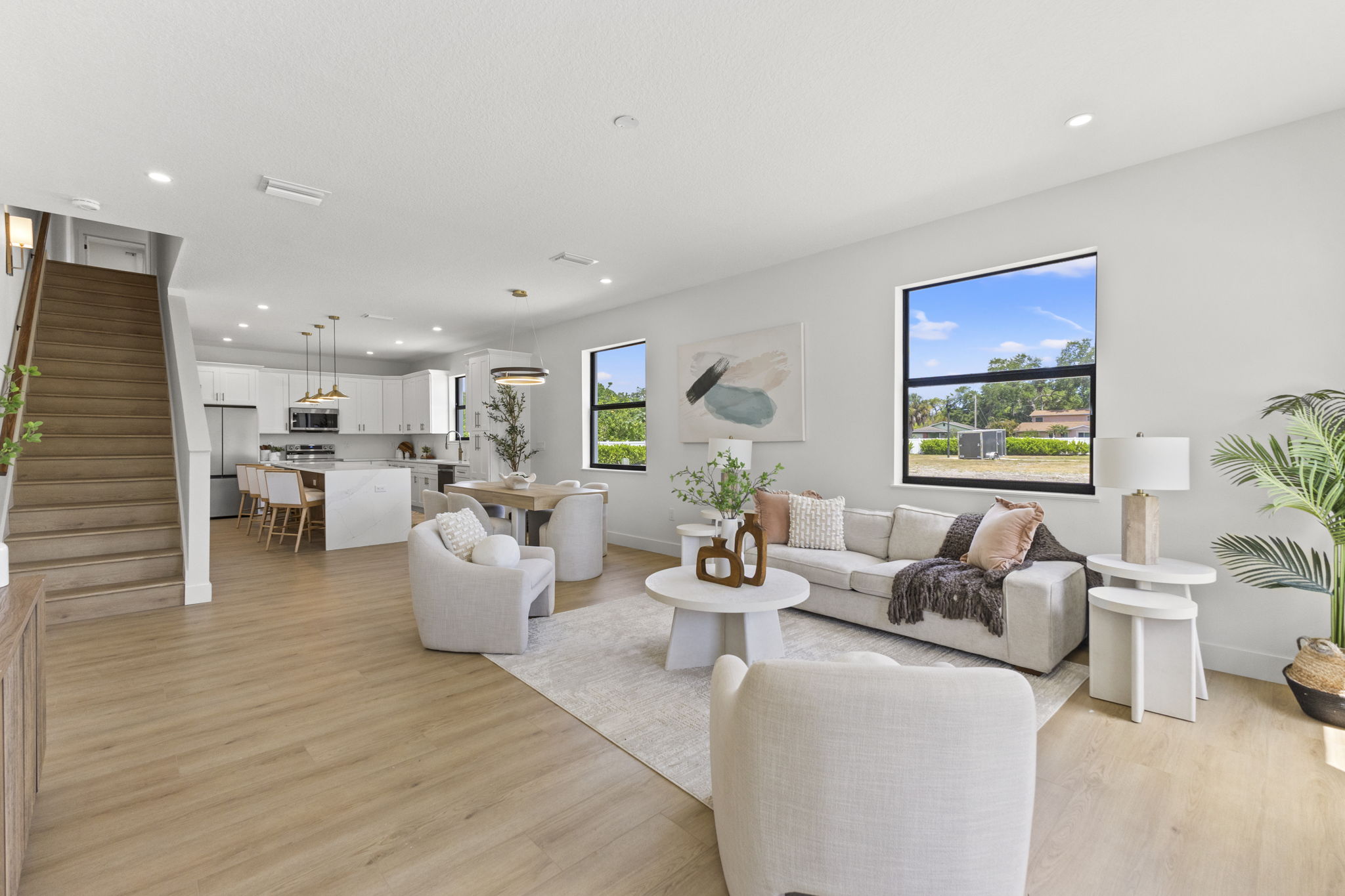
That is the category Latitudes in the Park belongs to. Twenty-five residences at full build-out, gated, on a site engineered and graded before the first slab was poured. Small enough that the entire community is a single unhurried drive. New enough that the roof, the mechanicals and the impact glass all begin their service lives on the day you are handed the keys.
For a buyer weighing an older block home at a lower number against new construction here, the honest comparison was never price against price. It is price plus roof, plus air handling, plus insurance exposure, plus the retrofit of every window, set against one number that includes all of it and asks nothing of your weekends.
Why the inland position changes the arithmetic
Latitudes in the Park sits approximately twenty-one feet above sea level in FEMA Zone X, which means flood insurance is not federally required. On the barrier islands that is rarely true, and the difference appears every month in the cost of carrying the home rather than once at closing. Lender requirements and individual circumstances still vary, and we would rather you confirm your own position than take ours on faith.
The construction is solid block through the first two levels, with impact-rated glass at every opening. That is the standard on all twenty-five residences, not a package offered at signing. In a market where insurers price wind mitigation with real attention, how a house is built is not a footnote.
The site itself sheds water rather than holding it. The grade moves it off the property between the buildings, and the entries sit above the drive, so what reaches the street does not reach the door. It is the least glamorous engineering on the property and the first thing an experienced Florida buyer asks about.
Who tends to settle here
Two-career households, where one person works in St. Petersburg and the other in Tampa. From the barrier islands, one of those two commutes is always the long one. From the middle of the county, neither is.
Second-home and seasonal owners who want a residence that can be locked and left, with no exterior to maintain and no flood premium in the monthly figure, and who appreciate that the association permits short-term rentals for the months they are elsewhere.
And owners moving down from larger Pinellas County houses who want new mechanicals, a proper garage and real outdoor space, and who are pleased to take that outdoor space vertically, on a rooftop with a view, rather than horizontally on a lawn that needs cutting.
Worth confirming yourself
Three things deserve your own eyes rather than any builder's word, including ours.
- Flood zone and elevation for the exact parcel, on the FEMA Flood Map Service Center.
- School assignment for the exact address, through the Pinellas County Schools locator.
- Recorded property data, taxes and prior sales, through the Pinellas County Property Appraiser.
Common questions
Is Pinellas Park part of St. Petersburg?
No. Pinellas Park is a separate incorporated city in central Pinellas County, established in 1914, with its own government, police department and parks system. It borders St. Petersburg to the south and east.
What is it like to live in Pinellas Park, Florida?
Daily life is short-distance. Groceries, a twenty-four-hour gym and a full shopping centre sit within three minutes, two large parks within five, the Gulf beaches within ten to fifteen, and downtown St. Petersburg within about twenty. It is a residential, working city rather than a resort town.
Why is new construction in Pinellas Park less expensive than in St. Petersburg?
Mid-county land carries a lower basis than waterfront and near-downtown parcels, and buyer search behaviour concentrates on the larger city's name. The same specification therefore prices lower here than it does a few miles south.
Does Latitudes in the Park require flood insurance?
The site sits approximately twenty-one feet above sea level in FEMA Zone X, where flood insurance is not federally required. Lender requirements and individual circumstances vary, so confirm the parcel on the FEMA Flood Map Service Center.